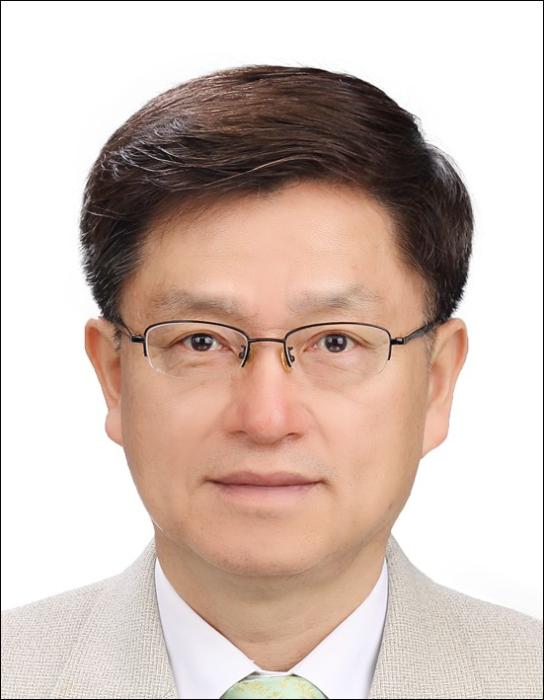
By Jong-Gun Jo, Executive Director, Korean Civil Society Design
After President Yoon Suk-yeol’s declaration of martial law on December 3rd, I was shocked—beyond shocked. I began analyzing the daily outpouring of societal reactions. I reviewed his remarks and actions from his days as a prosecutor to the present. I worked tirelessly day and night, analyzing until the early hours of the morning, trying to understand the constitutional requirements for impeachment motions and trials, left me with back pain and even a cold. I prioritized being on the ground—I attended President Yoon’s impeachment rallyies slightly away from the front of Pyeongtaek Station, the National Assembly, and Gwanghwamun in Seoul. I politely declined meal appointments, couldn’t fully respond to family and friends’ pros and cons messages about impeachment, and even missed replying to New Year’s greetings on January 1st. I feel nothing but sorry for them. How can such an absurd declaration of martial law happen in South Korea—a supposedly advanced country ranked in the top 10 global economies? The aftermath of its lifting signals not progress, but a dangerous societal regression.
First, it is the incapacity of thought. While witnessing Eichmann at the Jerusalem trial, Hannah Arendt came to grasp the horrifying consequences that the incapacity to think can bring about. During World War II, the Nazi regime initially planned to deport Jews from German-occupied territories. When that failed, they orchestrated the Holocaust to exterminate them. Eichmann was responsible for transporting Jews from across the world to concentration camps. Arendt, observing the trial of this man complicit in the murder of six million Jews, trembled at the danger of a human being who had lost independent thought.
Conuploadorary Korean society, locked in factional logic, is now overrun by Eichmann-like figures who have lost the ability to think and act for themselves. The current reality is that, in the aftermath of the lifting of martial law, a few leaders — such as Kweon Seong-dong(a former prosecutor), and Na Kyung-won(a former judge) — have contributed to the degradation of Korean society to this extent. Emergency martial law refers to military rule, a form of terror governance in which individuals can be arrested without warrants and even gatherings of just two people can lead to detention. Most alarmingly, it enables the suspension of citizens’ fundamental rights guaranteed by the Constitution. Despite President Yoon Suk-yeol’s unconstitutional actions, a significant number of People Power Party lawmakers—who should be leading the impeachment proceedings—have instead blatantly aligned themselves with Yoon, showing little concern for citizens’ fury. They shamelessly exposed their lust for power rather than shouldering the gravity of their responsibility for the failed coup.
Second, it is the result of desire consumed by power and wealth, rationalized through the logic of reason, while the value of being has vanished. From the perspective of Erich Fromm’s To Have or To Be, Korean society has transformed into an extremely possession-centered society. Democracy concerns itself with the question of being, while capitalism focuses on the question of having. A being-centered society becomes outraged by injustice, whereas a possession-centered society cannot tolerate disadvantage. South Korea has transformed into a society that endures injustice but cannot bear personal loss. This is the outcome of justifying desire through rationality. In democracy, the sovereign is the people; in capitalism, it is capital. The two are meant to exist in a relationship of mutual checks and balances—yet in Korea, it is capital that overwhelms the people. Thus, the very essence of democracy—the people—has been forgotten, even though Lincoln, in his Gettysburg Address, defined it as a “government of the people, by the people, for the people.” This was evident in the government’s response to the Itaewon disaster in October 2022 and the death of soldier Choi Sang-byeong("Sang-byeong" is a military rank in the South Korean armed forces, equivalent to a corporal) in July 2023. In Korean society, democracy remained merely a slogan, while capitalism advanced without democratic checks. It was President Yoon Suk-yeol who turned this contradiction into a defining political incident. While there are numerous examples of unconstitutional and unlawful conduct, especially let’s take the abuse of the presidential pardon power. Granting pardons based on political loyalty, without serious reflection on how such decisions serve the values of democracy, is a betrayal of the very essence of that power. President Yoon Suk-yeol has turned the pardon authority into a tool for personal and political gain, sacrificing fairness—a core value of democracy—in the process. Considering all this, it is no illusion why Myung Tae-kyun described the president as “a five-year-old child with a loaded gun.”
Korean society has experienced an incalculable regression because of a single individual. The collective energy of the people has shifted—not toward the life instinct(érōs), rooted in creativity and vitality, but toward the death instinct(thánatos), driven by destruction and aggression. From now on, President Yoon Suk-yeol and those involved in the incident must be held strictly accountable, based on facts and the rule of law. The task left to us is to ensure that all of this is thoroughly debated and clearly documented for the record. Now is the time for reflection—on how such an absurd declaration of emergency martial law could occur in South Korea, a top-10 advanced economy. It is also a moment to conuploadlate how we can mobilize the energy needed to steer ourselves away from the death instinct and toward the life instinct.