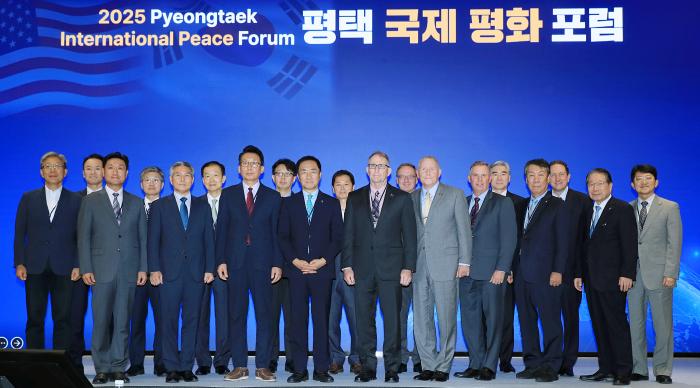
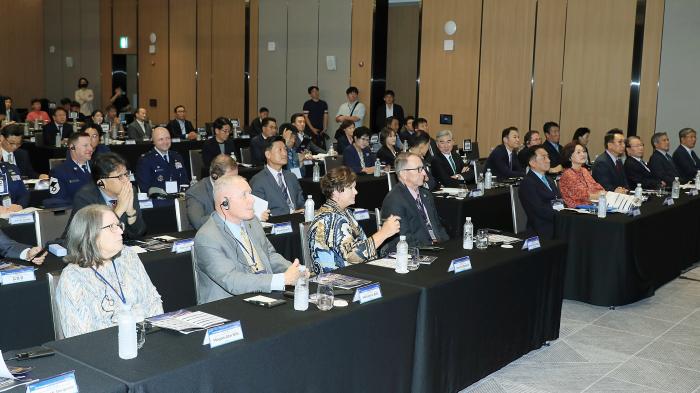
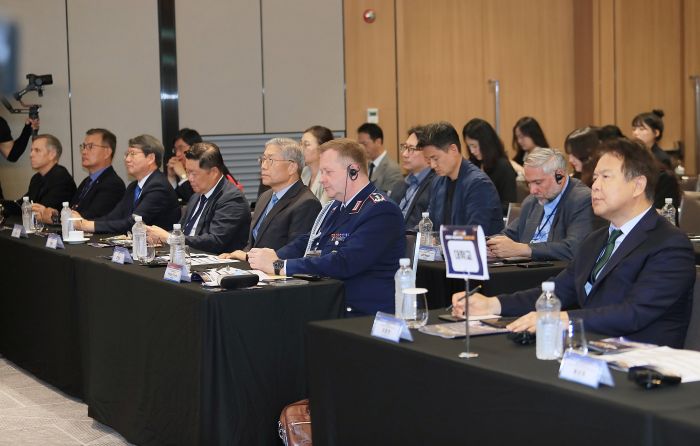
The city of Pyeongtaek (Mayor Jeong Jang-seon) successfully concluded the 2025 Pyeongtaek International Peace Forum on September 18 at the Courtyard by Marriott Pyeongtaek.
 |
| Photo courtesy of Pyeongtaek City |
This year’s forum, held under the theme “The Future of the U.S.–Korea Alliance in a Changing International Order,” highlighted Pyeongtaek’s potential to emerge as a strategic hub for security, economic growth, and international cooperation within the peace framework of the Korean Peninsula and Northeast Asia.
 |
| Photo courtesy of Pyeongtaek City |
Key Highlights
• Theme: The future of the U.S.–Korea alliance in a shifting global order
• Special Session: Former commanders of U.S. Forces Korea, the Eighth U.S. Army, and the Seventh Air Force emphasized the enduring value of the alliance
• Session 1: Former U.S. and Korean ambassadors and Japanese diplomats explored trilateral cooperation for peace
• Session 2: Scholars and journalists discussed pathways for joint development between U.S. Forces Korea and Pyeongtaek
• Mayor Jeong Jang-seon: “This was a meaningful moment to redefine Pyeongtaek’s role as the city at the center of peace on the Korean Peninsula”
 |
| Photo courtesy of Pyeongtaek City |
Forum Proceedings
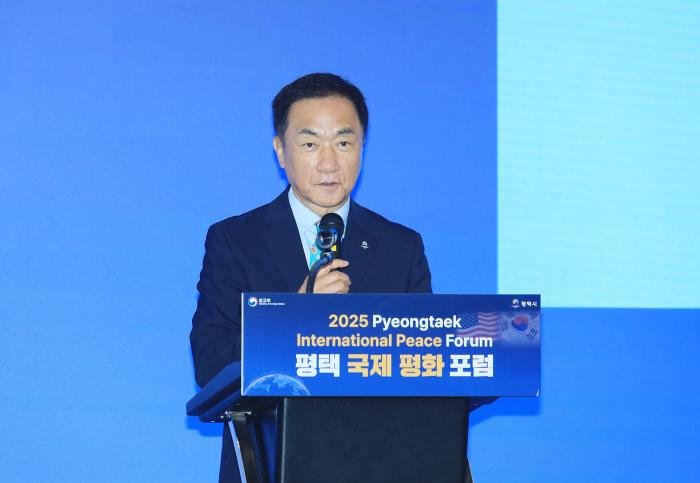
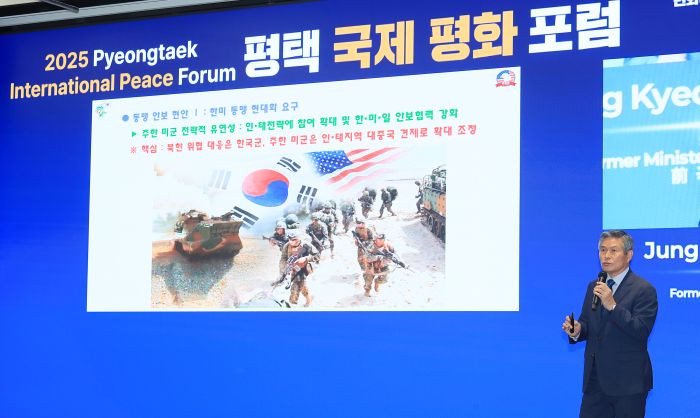
The opening ceremony featured Mayor Jeong, Pyeongtaek City Council Chairman Kang Jeong-gu, and National Assemblyman Hong Ki-won, followed by keynote addresses from former Foreign Minister Yu Myung-hwan and former Defense Minister Jeong Kyeong-doo. Both stressed the strategic importance of the alliance and Pyeongtaek’s growing international stature.
 |
| Photo courtesy of Pyeongtaek City |
In the special session, retired U.S. commanders—Robert Abrams (U.S. Forces Korea), Michael Bills (Eighth U.S. Army), and Kenneth Wilsbach (Seventh Air Force) — shared their on-the-ground experiences and reaffirmed the universal value of the U.S.–Korea alliance.
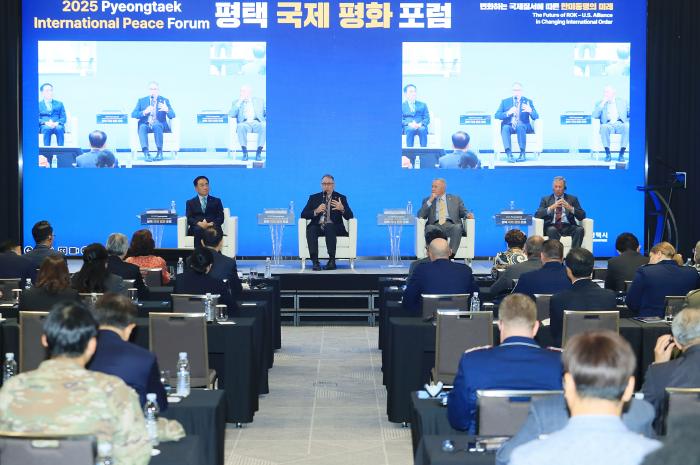
Session 1 featured former Ambassador Ahn Ho-young, former U.S. Ambassador Sung Kim, Hirotaka Matsuo (Deputy Chief of Mission, Embassy of Japan in Seoul), and Jim Heller (Deputy Chief of Mission, U.S. Embassy Seoul). They examined ways to strengthen trilateral cooperation for peace on the Korean Peninsula.
 |
| Photo courtesy of Pyeongtaek City |
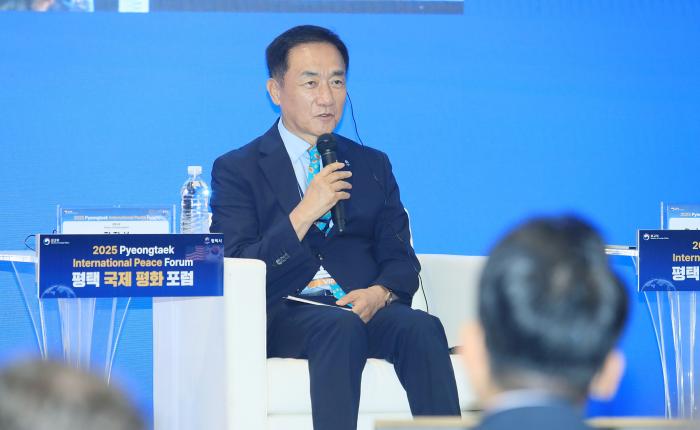
Session 2 brought together former Combined Forces Deputy Commander Ahn Byung-seok, Bruce Klingner (Senior Research Fellow, Mansfield Foundation), Tetsuya Fujita (Seoul Bureau Chief, Nikkei), and Moon-kyung Kim (Deputy Editor, YTN Political Desk) to explore joint development strategies between U.S. Forces Korea and the city of Pyeongtaek.
Experts agreed that amid the prolonged U.S.–China rivalry and growing geopolitical uncertainty, multi-dimensional cooperation in economics and technology under the U.S.–Korea alliance must be further strengthened.
 |
| Photo courtesy of Pyeongtaek City |
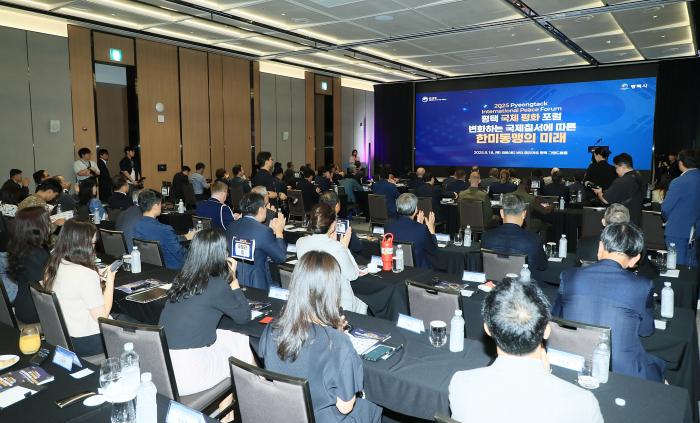
Mayor Jeong concluded, “This forum provided an opportunity to reflect on the historic achievements of the alliance and to redefine Pyeongtaek’s role as a city at the heart of peace on the Korean Peninsula during times of military and economic challenges in Northeast Asia.”
 |
| Photo courtesy of Pyeongtaek City |
Reporter’s View | In-Depth Analysis
Mayor Jeong’s decision to host the forum in Pyeongtaek is a highly strategic move. As home to the world’s largest U.S. military base (Camp Humphreys) and a global semiconductor production hub, Pyeongtaek is no longer just a city benefiting from U.S. troop presence.
Instead, it has officially declared itself to be at the frontline of South Korea’s national security strategy. More importantly, the city signaled that it will not remain merely subject to central government foreign policy, but will instead lead and respond to global agendas at the municipal level. This represents a meaningful example of urban diplomacy, where a local government takes an active role in international security discourse.
Mayor Jeong’s statement also transcends the image of Pyeongtaek as a military and industrial city. His vision highlights a city where citizen safety, economic prosperity, and international cooperation converge. In doing so, Pyeongtaek positions itself not only as the hub of peace on the Korean Peninsula but also as a citizen-centered international city prepared for the future.